<?xml version="1.0" encoding="UTF-8"?>
<feed xmlns="http://www.w3.org/2005/Atom">
  <title type="text">The Mason Experience: Past and Present</title>
  <updated>2026-09-06T11:47:55+00:00</updated>
  <generator uri="http://framework.zend.com" version="1.12.20">Zend_Feed_Writer</generator>
  <link rel="alternate" type="text/html" href="https://pastandpresent.curatescape6.reclaim.hosting/"/>
  <link rel="self" type="application/atom+xml" href="https://pastandpresent.curatescape6.reclaim.hosting/items/browse?output=rss2"/>
  <id>https://pastandpresent.curatescape6.reclaim.hosting/</id>
  <author>
    <name>The Mason Experience: Past and Present</name>
    <uri>https://pastandpresent.curatescape6.reclaim.hosting</uri>
  </author>
  <link rel="hub" href="http://pubsubhubbub.appspot.com/"/>
  <entry>
    <title type="html"><![CDATA[West Campus: Nixon, Pig Sheds, and Underdogs]]></title>
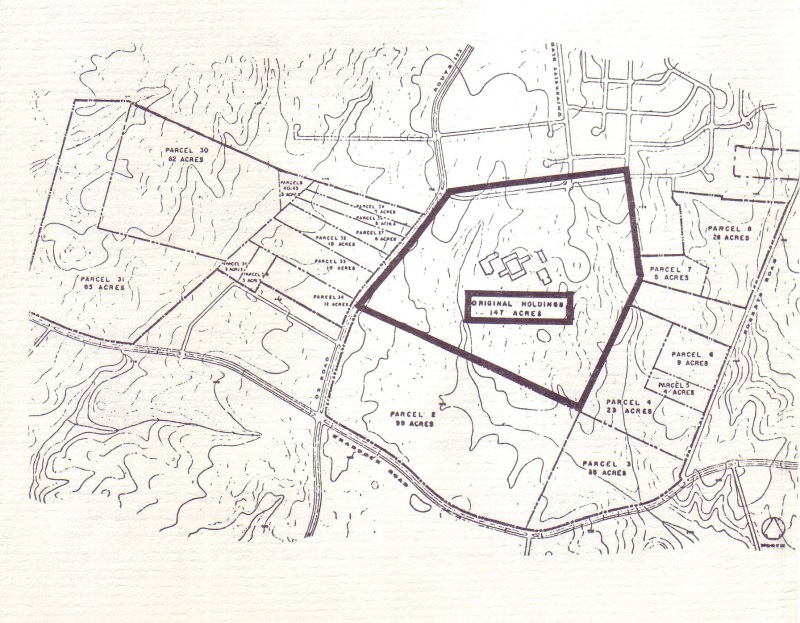
    <summary type="html"><![CDATA[<p><strong><em>Today, West Campus is home to Mason's Women's and Men's athletic programs, including Track, Lacrosse, Soccer, Baseball, and Softball.  Its early history, however, had little to do with sports. </em></strong></p><img src="https://pastandpresent.curatescape6.reclaim.hosting/files/fullsize/6a84541f8a92562a77bf0bf5502538c3.jpg" alt="Land acquisition, George Mason College, July 18, 1969" /><br/><p>George Mason University's West Campus section of the Fairfax Campus comprises about 215 acres on Ox Road (VA 123) directly west of Fairfax campus. A complex of buildings, a stadium, athletic fields, and parking lots cover about 40% of the property. The land was acquired in 1969, but Mason Athletics did not leave a footprint there until the early 1980s.
In the mid-1960s, the land that made up today's West Campus contained three small homesteads, one of them belonging to Oliver F. Atkins and his wife, Marjorie. Atkins was the Washington Photography Correspondent for The Saturday Evening Post. He and Marjorie watched the development of George Mason's Fairfax Campus from their home just across Ox Road ever since construction began in 1963. Sometime in 1964, Atkins contacted George Mason College officials and volunteered to serve as its first (unofficial) photographer for college events until a permanent one was hired. While Mason's photographer that winter and next spring, Atkins photographed the college's Dedication in the winter of 1964 and made several other photographs of the college campus.
Atkins took a leave of absence from the Post in 1968 to become President Richard M. Nixon's official photographer. He and Marjorie moved from their home across the road from Mason out to Washington, Virginia. Atkins was Nixon's photographer from 1969 until 1974 and was responsible for the photograph of Nixon bowling (featured in the film, The Big Lebowski) and the images of the President meeting Elvis Presley, widely considered among the most recognizable of his work during this period. Atkins later donated his personal collection of his photographs to George Mason University Libraries in 1977.
Mason had barely been in the new Fairfax campus two years and had about an enrollment of 800 when a sobering report by the Northern Virginia Regional Planning and Economic Development Council was released. The 1966 study estimated that Mason’s enrollment could grow to 15,000 by 1985, and that the college would need to acquire about 450 additional adjacent acres to be able to accommodate this growth. A push to acquire more land for the campus began. 
There was available land on the south, east, and west of the original 150-acre tract, but Mason had to act fast before developers acquired it. Administrators hired local land attorney, John T. “Till” Hazel to help. Hazel's expertise helped the college secure more than thirty individual parcels of land totaling 421 acres (including the original Atkins homesite), the last of which were officially transferred to the college in a ceremony on July 18, 1969, presided over by Virginia Governor, Mills E. Godwin, Jr. Hazel went on to be one of Mason's biggest benefactors, serving as Rector of the Board of Visitors, playing a large role in the acquisition of the School of Law (who's building carries his name) and making other generous donations of his time and resources to the university. 
The over two hundred acres just west of the campus remained mostly fallow after being acquired by the college until 1972, when Mason offered a former pig shed on the property to Astronomy professor, William Lankford for the construction of a telescope. Three of his students, John Whelan, Elaine "Chipper" Petersen, and Robert Veenstra took on the three-year task of constructing the 7-foot-long, 500-pound telescope. The site known as the Herschel Observatory opened to the university and local community in September 1975. At the time it was the most powerful telescope in the northern Virginia area. The observatory was torn down in the early 1980s to make way for the construction of the George Mason University Field House, opening in 1982. John and Elaine later married and continued to support George Mason University.
With the opening of the Field House and Stadium in 1982 and 1983, respectively, West Campus became a home for Mason's larger Intercollegiate Athletics programs. 
In November of 1985, the George Mason University Women’s Soccer team captured the highest prize in collegiate athletics, the Division I National Championship. After a 15-2-1 season, the Patriots earned a spot in the NCAA tournament. After wins in the first three rounds against William and Mary, SUNY Cortland, and University of Massachusetts, all that remained for Mason was a match with 4-time National Champion, North Carolina. Carolina had beaten Mason 4-0 in an NCAA semifinal match in 1983, and Mason was the consensus underdog in their upcoming rematch.
Mason had drawn home field, the new Mason Stadium on West Campus, for the Final on November 24th. Before a partisan crowd of 4,500 and an ESPN television audience of millions, Mason scored first at 30 minutes on an 18-yarder from All-American Pam Bauman. The Patriots held the Tarheels scoreless for the rest of the game, while All-American Lisa Gmitter scored for Mason in the 86th minute to seal the 2-0 victory. The win, against a team that had a record of ninety-nine wins and 4 losses during the previous 4 years, was indeed the first shot heard round the world for Mason athletics. Eleven years later, the Men's Track and Field team became the second Mason team to win a Division I Championship at the Indoor Track and Field Champioships in Indianapolis Indiana. 
Today's West Campus hosts Mason's larger indoor and outdoor athletics programs, including Softball, Baseball, Track and Field, and Lacrosse. Its buildings include the Field House, which house the Intercollegiate Athletics offices and indoor track and field venues, George Mason Stadium, Spuhler Field, named after Raymond "Hap" Spuhler, Mason's first Athletic Director, the Softball Complex, practice and recreational fields, and parking lots.
In the spring of 2015, the university built a road to connect the West Campus to the main part of campus. An overpass was constructed to carry both directions of Ox Road over this road. The road, named Campus Drive improves pedestrian and vehicle access between the two parts of campus.</p><p><em><strong><a href="https://pastandpresent.curatescape6.reclaim.hosting/items/show/13">For more (including 9 images) view the original article</a></strong></em></p>]]></summary>
    <published>2023-03-07T14:17:07+00:00</published>
    <updated>2026-04-17T19:45:23+00:00</updated>
    <link rel="alternate" type="text/html" href="https://pastandpresent.curatescape6.reclaim.hosting/items/show/13"/>
    <id>https://pastandpresent.curatescape6.reclaim.hosting/items/show/13</id>
    <author>
      <name>George Mason University Past and Present Team</name>
    </author>
  </entry>
  <entry>
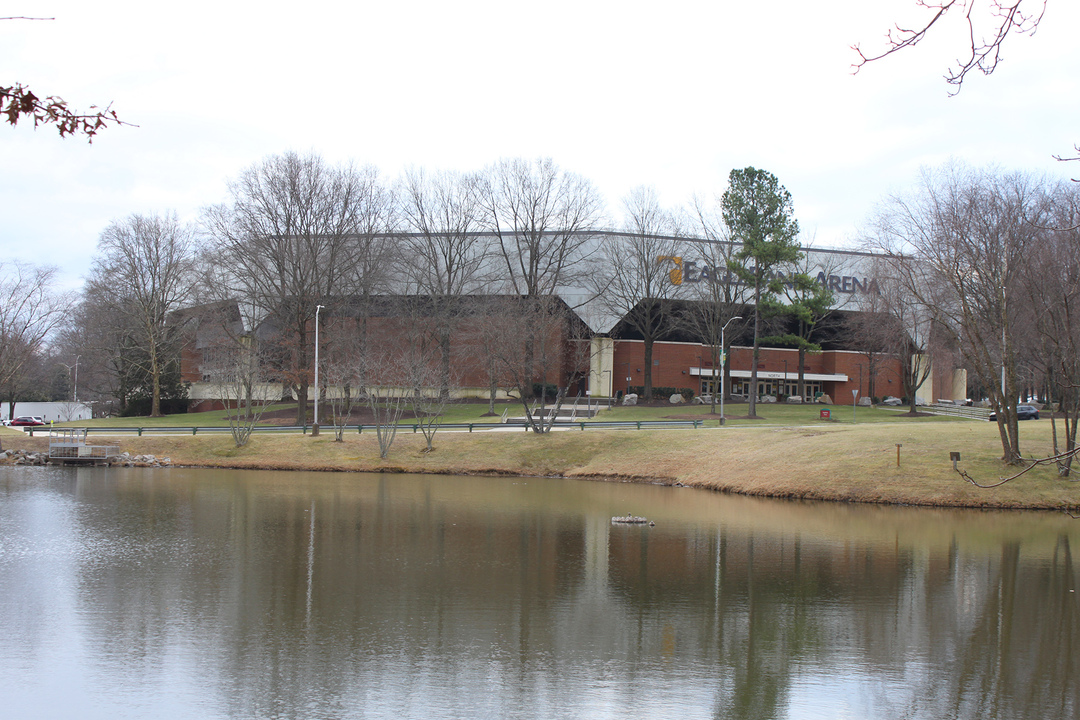
    <title type="html"><![CDATA[EagleBank Arena: Formerly known as Patriot Center]]></title>
    <summary type="html"><![CDATA[<p><strong><em>Completed in the fall of 1985, EagleBank Arena is one of Mason's most notable landmarks and top local venue for sports and entertainment. </em></strong></p><img src="https://pastandpresent.curatescape6.reclaim.hosting/files/fullsize/52d58490e38345a8e456267c66b701c8.jpg" alt="Eagle Bank Arena, view from the northwest" /><br/><p>On the south side of campus, nearly adjacent to Braddock Road is EagleBank Arena. Mason’s 10,000-seat venue has hosted sporting events, commencements, concerts, and other major gatherings since its completion in 1985. </p><p>Ten years after becoming independent in 1972, George Mason University grew rapidly. Enrollment had increased by nearly 500% (14,500 from about 3,000). Mason president George W. Johnson was determined to increase the university’s visibility in northern Virginia and encourage citizens to visit the campus. The PE Building, built in 1973, served as a sports arena and an auditorium for commencements, university celebrations, and other affairs, but its maximum capacity was 3,000. By 1982 the university was nearing the point where it was graduating almost 2,000 individuals each spring. It was clear a large multi-use building for university events was needed. </p><p>Construction began in August of 1983 with an expected opening of January 1985. University President, George W. Johnson planned to have Spring Commencement in the building, initially called “Patriot Center”. Previous ceremonies were held in the PE Building (today known as the RAC) and on various outdoor spaces around campus. As unexpected construction delays pushed the opening back toward fall of that year, Johnson remained undeterred in his desire to hold the event in THAT building THAT SPRING, declaring: “We will have graduation in the arena on May 18. You may have to wear a hard hat, but we are having it in there.”  </p><p>While graduating students had initially been told that their commencement would be held on the Quad in front of Fenwick Library, Johnson requested and received special permission from the building contractor to use Patriot Center, after passing necessary inspections, for the ceremony. Plywood was lain on the concrete floor and a temporary stage for the platform party was hastily set up. The concrete walls inside the arena, due to be painted in green and gold, remained unpainted and bare. Nevertheless, the ceremony went off without a hitch for the 2,204 graduates and their families on May 18. The arena was then re-closed to the public for completion of construction. </p><p>On October 4, 1985, the arena was open to the public for its first event; a capacity crowd, which included actor Jack Nicholson, saw a sold-out exhibition game between the New York Knicks and the Washington Bullets. The game featured then-rookie sensation and future Hall of Famer, Patrick Ewing. That fall Patriot Center became the permanent home of the Men’s and Women’s Basketball teams, ending twelve seasons in the PE Building. </p><p>On March 26, 2006, the Patriot Center was host to raucous victory celebration, as the Men’s Basketball team defeated the Number One Seed, University of Connecticut to earn a seat in the NCAA Final Four. As the game in the Verizon Center in Washington, DC ended, students formed a spontaneous victory parade around Patriot Circle and filled the Patriot Center to await the team’s return. As the team pulled into campus, fireworks were set off over Mason Pond. The team triumphantly marched into a Patriot Center full of happy students and members of the community.   </p><p>Since 1985, the building has hosted over 3,000 events and is among the top 100 grossing arenas in the world.  Beginning in 1998, EagleBank Arena's Parking Lot L has been host to the university's Mason Day event.</p><p>On May 7, 2015, the university announced that the name would be changed on July 1, 2015 to "EagleBank Arena at George Mason University" following a partnership deal with EagleBank.</p><p><em><strong><a href="https://pastandpresent.curatescape6.reclaim.hosting/items/show/9">For more (including 9 images) view the original article</a></strong></em></p>]]></summary>
    <published>2023-02-07T21:14:03+00:00</published>
    <updated>2026-04-17T19:45:23+00:00</updated>
    <link rel="alternate" type="text/html" href="https://pastandpresent.curatescape6.reclaim.hosting/items/show/9"/>
    <id>https://pastandpresent.curatescape6.reclaim.hosting/items/show/9</id>
    <author>
      <name>George Mason University Past and Present Team</name>
    </author>
  </entry>
  <entry>
    <title type="html"><![CDATA[The RAC : Formerly, the P.E. Building]]></title>
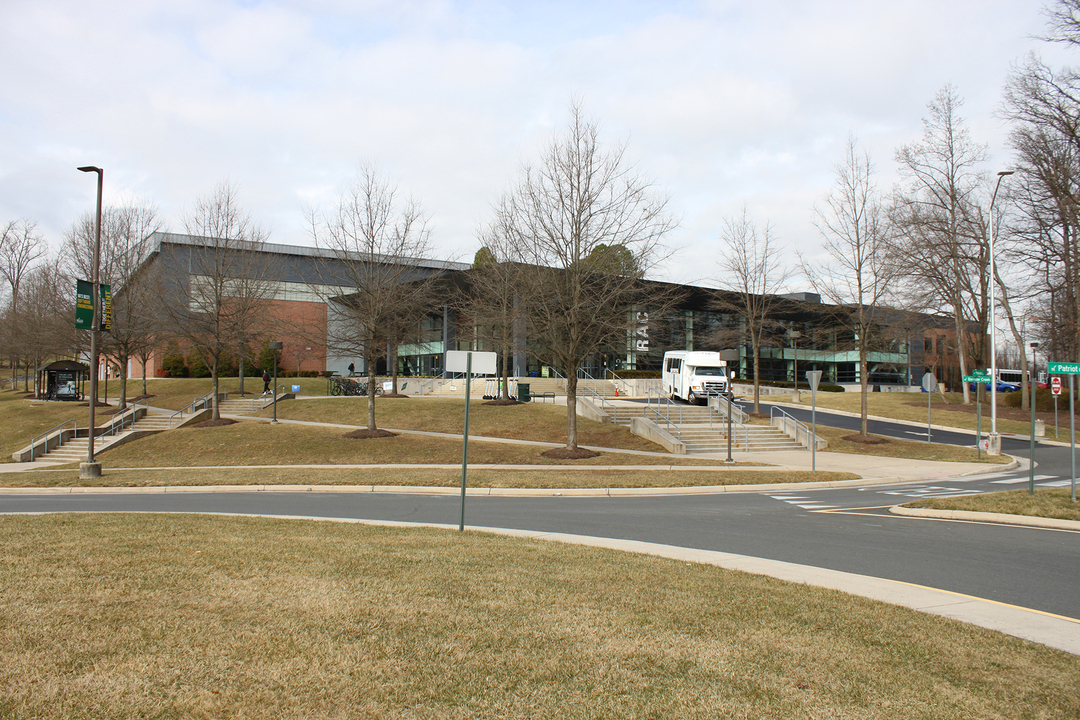
    <summary type="html"><![CDATA[<p><strong><em>The state-of-the-art Recreation and Athletic Conference is a modern fitness facility with many amenities. It began serving the Mason community as the Physical Education Building over fifty years ago.</em></strong></p><img src="https://pastandpresent.curatescape6.reclaim.hosting/files/fullsize/47ca84c6e24631c985d4136c4c537749.jpg" alt="Recreation and Athletics Complex, view from  southeast" /><br/><p>The Recreation and Athletic Complex (RAC) is home to three intercollegiate sports at Mason (wrestling, volleyball, and tennis) and plays a key part in Mason Recreation’s programming. At over 120,000 square feet the RAC features racquetball and squash courts, a two-story fitness center, and two smaller gyms. It is also host to the ROTC offices, and offices and classroom space for Mason’s School of Recreation, Health, and Tourism. While the RAC’s current modern look and amenities are due to a major renovation that took place between 2007 and 2009, the original building was completed in July of 1972.</p><p>George Mason College began planning for its Physical Education Center in 1968. Mason had just graduated its first class as a four-year college and was working toward becoming an independent university soon with an enrollment of over 15,000 by the mid-1980s.  Virginia state-supported college programs at that time required all students to complete two years of physical education. Mason did not have the facilities to provide for an enrollment that was doubling every year in the late 1960s. Physical Education classes had to be held at Mason’s North Campus, 10 minutes away on Lee Highway. Its Basketball team had to play home games at W.T. Woodson High School over on Main Street in Fairfax. And at that time, it did not have a venue that could seat more than three hundred.</p><p>Planners stressed that a building for providing a space for physical education and other physical activities would surely have multiple uses such as: commencement exercises, musical events, dramatic performances, convocations, intercollegiate athletic events, large social events, and other uses for the local community, as well. With these uses in mind, the college successfully petitioned the Commonwealth to fund its Physical Education Center in 1969. </p><p>Groundbreaking and construction began in 1970 and was completed in July 1972 shortly after Hurricane Agnes passed through the northern Virginia area, dumping several inches of rain, and causing flood damage to the building’s floors. Cleanup crews were quickly brought in to prepare the building for immediate occupancy.   </p><p>The new Physical Education Center or as Mason locals called it, “the PE Building”, was put to use immediately that fall. Faculty and staff moved into their new offices just ahead of the fall semester. Physical Education Classes (Phys Ed 123 and 133) for the Second Term of the Summer Session (July 18-August 17) were held in the building. On December 6, Governor A. Linwood Holton conducted his regional Governor’s Conference in the basketball gym. Nearly one-thousand Northern Virginia residents, business leaders, and constituents packed the bleachers for an opportunity to share their thoughts with the Governor. Athletes on the basketball, wrestling, and gymnastics teams began training and competing against their conference rivals on their new home turf, and Spring Commencement for 1973 was held there, as well.</p><p>Perhaps the most interesting and bizarre happening at the PE Building took place two days after the Governor’s Conference.  On December 8, the rock band Mountain, then a major national act, was scheduled to play a show the PE Building. Oddly, an alumni dinner was taking place just above the gym on an upper floor.  Rowdy behavior by gatecrashers trying to get into the sold out show prompted University President, Vergil Dykstra to come downstairs to assess the situation. Several windows in the building were smashed by the unruly visitors, and the doors into the gym were temporarily chained shut to prevent a stampede into the facility.  Dr. Dykstra helped the situation by blocking a doorway himself until order could be restored.</p><p>In the mid-2000s, after over 30 years of continuous service, the venerable PE Building was due for a refresh. A multilevel addition was built, creating an additional two-story venue for wrestling and volleyball, as well as other multiuse rooms. Existing interior spaces were reorganized to maximize space. And a new, more modern exterior completed the upgrades. Overall, the building gained 67,000 additional usable square feet and received a new name, the Recreation and Athletic Complex.</p><p><em><strong><a href="https://pastandpresent.curatescape6.reclaim.hosting/items/show/8">For more (including 9 images) view the original article</a></strong></em></p>]]></summary>
    <published>2023-02-06T18:22:34+00:00</published>
    <updated>2026-04-17T19:45:23+00:00</updated>
    <link rel="alternate" type="text/html" href="https://pastandpresent.curatescape6.reclaim.hosting/items/show/8"/>
    <id>https://pastandpresent.curatescape6.reclaim.hosting/items/show/8</id>
    <author>
      <name>George Mason University Past and Present Team</name>
    </author>
  </entry>
</feed>