<?xml version="1.0" encoding="UTF-8"?>
<feed xmlns="http://www.w3.org/2005/Atom">
  <title type="text">The Mason Experience: Past and Present</title>
  <updated>2026-04-17T19:45:23+00:00</updated>
  <generator uri="http://framework.zend.com" version="1.12.20">Zend_Feed_Writer</generator>
  <link rel="alternate" type="text/html" href="https://pastandpresent.curatescape6.reclaim.hosting/"/>
  <link rel="self" type="application/atom+xml" href="https://pastandpresent.curatescape6.reclaim.hosting/items/browse?output=rss2"/>
  <id>https://pastandpresent.curatescape6.reclaim.hosting/</id>
  <author>
    <name>The Mason Experience: Past and Present</name>
    <uri>https://pastandpresent.curatescape6.reclaim.hosting</uri>
  </author>
  <link rel="hub" href="https://pubsubhubbub.appspot.com/"/>
  <entry>
    <title type="html"><![CDATA[West Campus: Nixon, Pig Sheds, and Underdogs]]></title>
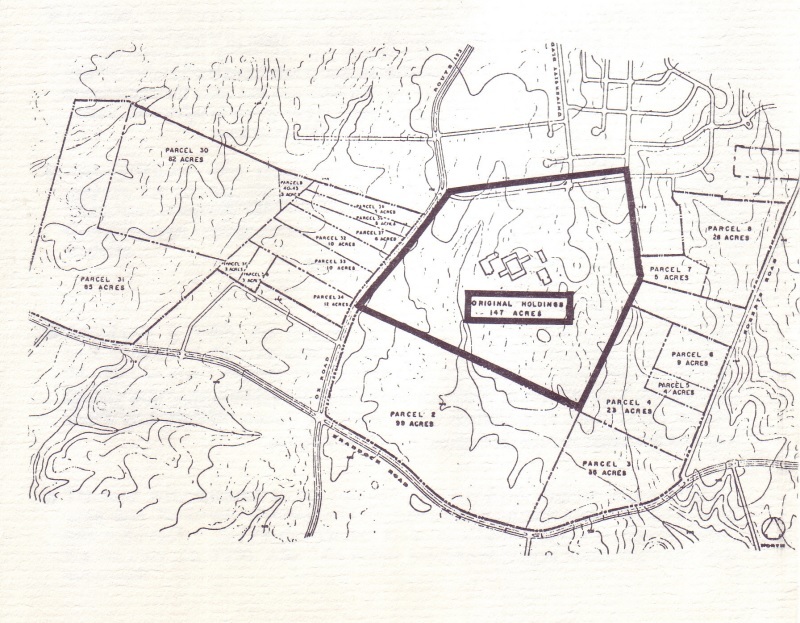
    <summary type="html"><![CDATA[<p><strong><em>Today, West Campus is home to Mason's Women's and Men's athletic programs, including Track, Lacrosse, Soccer, Baseball, and Softball.  Its early history, however, had little to do with sports. </em></strong></p><img src="https://pastandpresent.curatescape6.reclaim.hosting/files/fullsize/6a84541f8a92562a77bf0bf5502538c3.jpg" alt="Land acquisition, George Mason College, July 18, 1969" /><br/><p>George Mason University's West Campus section of the Fairfax Campus comprises about 215 acres on Ox Road (VA 123) directly west of Fairfax campus. A complex of buildings, a stadium, athletic fields, and parking lots cover about 40% of the property. The land was acquired in 1969, but Mason Athletics did not leave a footprint there until the early 1980s.
In the mid-1960s, the land that made up today's West Campus contained three small homesteads, one of them belonging to Oliver F. Atkins and his wife, Marjorie. Atkins was the Washington Photography Correspondent for The Saturday Evening Post. He and Marjorie watched the development of George Mason's Fairfax Campus from their home just across Ox Road ever since construction began in 1963. Sometime in 1964, Atkins contacted George Mason College officials and volunteered to serve as its first (unofficial) photographer for college events until a permanent one was hired. While Mason's photographer that winter and next spring, Atkins photographed the college's Dedication in the winter of 1964 and made several other photographs of the college campus.
Atkins took a leave of absence from the Post in 1968 to become President Richard M. Nixon's official photographer. He and Marjorie moved from their home across the road from Mason out to Washington, Virginia. Atkins was Nixon's photographer from 1969 until 1974 and was responsible for the photograph of Nixon bowling (featured in the film, The Big Lebowski) and the images of the President meeting Elvis Presley, widely considered among the most recognizable of his work during this period. Atkins later donated his personal collection of his photographs to George Mason University Libraries in 1977.
Mason had barely been in the new Fairfax campus two years and had about an enrollment of 800 when a sobering report by the Northern Virginia Regional Planning and Economic Development Council was released. The 1966 study estimated that Mason’s enrollment could grow to 15,000 by 1985, and that the college would need to acquire about 450 additional adjacent acres to be able to accommodate this growth. A push to acquire more land for the campus began. 
There was available land on the south, east, and west of the original 150-acre tract, but Mason had to act fast before developers acquired it. Administrators hired local land attorney, John T. “Till” Hazel to help. Hazel's expertise helped the college secure more than thirty individual parcels of land totaling 421 acres (including the original Atkins homesite), the last of which were officially transferred to the college in a ceremony on July 18, 1969, presided over by Virginia Governor, Mills E. Godwin, Jr. Hazel went on to be one of Mason's biggest benefactors, serving as Rector of the Board of Visitors, playing a large role in the acquisition of the School of Law (who's building carries his name) and making other generous donations of his time and resources to the university. 
The over two hundred acres just west of the campus remained mostly fallow after being acquired by the college until 1972, when Mason offered a former pig shed on the property to Astronomy professor, William Lankford for the construction of a telescope. Three of his students, John Whelan, Elaine "Chipper" Petersen, and Robert Veenstra took on the three-year task of constructing the 7-foot-long, 500-pound telescope. The site known as the Herschel Observatory opened to the university and local community in September 1975. At the time it was the most powerful telescope in the northern Virginia area. The observatory was torn down in the early 1980s to make way for the construction of the George Mason University Field House, opening in 1982. John and Elaine later married and continued to support George Mason University.
With the opening of the Field House and Stadium in 1982 and 1983, respectively, West Campus became a home for Mason's larger Intercollegiate Athletics programs. 
In November of 1985, the George Mason University Women’s Soccer team captured the highest prize in collegiate athletics, the Division I National Championship. After a 15-2-1 season, the Patriots earned a spot in the NCAA tournament. After wins in the first three rounds against William and Mary, SUNY Cortland, and University of Massachusetts, all that remained for Mason was a match with 4-time National Champion, North Carolina. Carolina had beaten Mason 4-0 in an NCAA semifinal match in 1983, and Mason was the consensus underdog in their upcoming rematch.
Mason had drawn home field, the new Mason Stadium on West Campus, for the Final on November 24th. Before a partisan crowd of 4,500 and an ESPN television audience of millions, Mason scored first at 30 minutes on an 18-yarder from All-American Pam Bauman. The Patriots held the Tarheels scoreless for the rest of the game, while All-American Lisa Gmitter scored for Mason in the 86th minute to seal the 2-0 victory. The win, against a team that had a record of ninety-nine wins and 4 losses during the previous 4 years, was indeed the first shot heard round the world for Mason athletics. Eleven years later, the Men's Track and Field team became the second Mason team to win a Division I Championship at the Indoor Track and Field Champioships in Indianapolis Indiana. 
Today's West Campus hosts Mason's larger indoor and outdoor athletics programs, including Softball, Baseball, Track and Field, and Lacrosse. Its buildings include the Field House, which house the Intercollegiate Athletics offices and indoor track and field venues, George Mason Stadium, Spuhler Field, named after Raymond "Hap" Spuhler, Mason's first Athletic Director, the Softball Complex, practice and recreational fields, and parking lots.
In the spring of 2015, the university built a road to connect the West Campus to the main part of campus. An overpass was constructed to carry both directions of Ox Road over this road. The road, named Campus Drive improves pedestrian and vehicle access between the two parts of campus.</p><p><em><strong><a href="https://pastandpresent.curatescape6.reclaim.hosting/items/show/13">For more (including 9 images) view the original article</a></strong></em></p>]]></summary>
    <published>2023-03-07T14:17:07+00:00</published>
    <updated>2026-04-17T19:45:23+00:00</updated>
    <link rel="alternate" type="text/html" href="https://pastandpresent.curatescape6.reclaim.hosting/items/show/13"/>
    <id>https://pastandpresent.curatescape6.reclaim.hosting/items/show/13</id>
    <author>
      <name>George Mason University Past and Present Team</name>
    </author>
  </entry>
  <entry>
    <title type="html"><![CDATA[The First Four Buildings at the Fairfax Campus: North, South,  East and West Buildings]]></title>
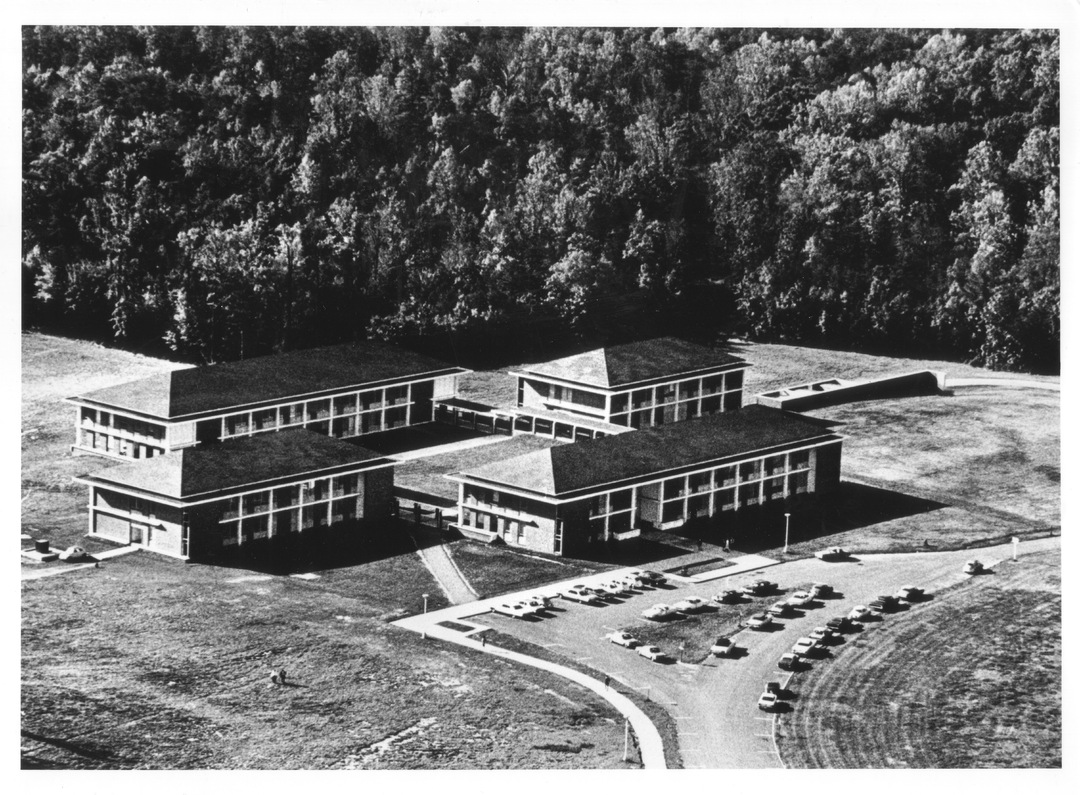
    <summary type="html"><![CDATA[<p><strong><em>The Fairfax campus opened in September 1964 with only four buildings. From then until 1974, these original buildings were the center of Mason student life and the site of many notable events.</em></strong></p><img src="https://pastandpresent.curatescape6.reclaim.hosting/files/fullsize/1b10b4e17a34adc477b0062f706460b4.jpg" alt="George Mason College, Fairfax Campus, ca. 1965, aerial photograph" /><br/><p>A groundbreaking ceremony for the new Fairfax campus was held on August 1, 1963. Students at Bailey’s Crossroads knew of the construction, but few were interested in following it. Student photographers Jim Wilson and Bill Flandermeyer visited the campus while it was under construction and took some of the earliest photographs of the Fairfax campus.
The campus at Fairfax officially opened on Monday, September 14, 1964, to 356 registered students. This number represented a 58% increase in the student population from the final school year at Bailey’s Crossroads. The original campus consisted of four buildings, named North, South, East and West, each for the direction it faced. Because the campus was initially small, students spent much of their campus life from 1964 to 1974 in these first four buildings. The then-state-of-the-art buildings were designed and built by local businesses Joseph Saunders & Associates of Alexandria and Eugene Simpson and brother, respectively.  
On opening day, Mason’s new director, Robert Reid, boasted to the Fairfax Times that Mason was the first fully air-conditioned college in the Washington, D.C., area. Air conditioning was a welcome change for students and faculty who experienced the lack of climate control in the old school building at Bailey’s Crossroads. They were delighted with the spacious, top-of-line classrooms and laboratories. The air conditioning and brand-new facilities temporarily distracted them from realizing the campus lacked some essential amenities. During the first week, there was no faculty lounge or place for students to get food and beverages. Mason’s administration quickly set up vending machines in a study hall as a temporary solution.
The campus was formally dedicated on November 12, 1964. The ninety-minute dedication ceremony took place in front of the North Building. Nearly a thousand people attended, including prominent politicians, educators, members of the community and the local press.
Construction was still ongoing when the Fairfax campus opened. The sidewalks were incomplete, so planks were put down when it rained. The covered walkways between the buildings had yet to be constructed. Former students described the campus as “a sea of mud.” Even with the wooden planks, mud was difficult to avoid since students had to cross an unpaved path between the North and East Buildings to reach their gravel parking lot. Photographs from the 1965 to 1966 yearbook show that in addition to the completion of sidewalks and covered walkways, the roads around campus and parking spaces were paved, finally ending the mud problem.</p><p><strong>South Building (Krug Hall)</strong>
By 1965, the students received a dining hall in the basement of the South Building. They named it the Ordinary, after the old English word for a pub. Chemical smells often drifted in from the biology and chemistry laboratories directly above. The Ordinary quickly became a popular hangout spot for students. Like their predecessors at the Bailey’s Crossroads campus, alumni from the Class of 1968 recalled playing competitive games of Hearts, Spades and Bridge. These card games were sometimes so intense that students nearly missed classes.
The Ordinary started serving fresh food in the fall of 1965. Articles <em>in The Gunston Ledger</em> frequently complained that the Ordinary was too crowded, so additional spaces for students to gather were added or improved in the East and West Buildings beginning in 1965. The Ordinary featured a jukebox. When the original jukebox died in April of 1966, a student penned an obituary for it in <em>The Gunston Ledger </em>commemorating its year and a half of service to students. <em>The Gunston Ledger</em> gleefully announced the purchase of a new jukebox for the Ordinary in October 1966. The Ordinary remained a gathering place for students until 1974 when the building that is now SUB I was completed.
Mason Day began in 1965 as a half-day of speeches and awards the day after UVA's Founder's Day celebration. During the 1968 to 1969 school year, Student Government Activities Chair, Mike Baker, transformed Mason Day into a multi-day spectacle of fun and entertainment. As part of Mason Day in 1969, for 3 days, 40 male students camped in tents behind the South Building. The event was labeled “Mason’s First Dormitories.” They ate their meals in the Ordinary, played sports on the lawn, roasted hot dogs, played music, watched movies and attended a presentation by local photographer Charles Baptie in the Lecture Hall, and staged a water balloon fight. Mason Tent City remained a tradition until 1977, when the university opened permanent dormitories.</p><p><strong>North Building (Finley Building)</strong>
The North Building originally housed Mason’s administrative offices. An anonymous article in <em>The Gunston Ledger</em>, on November 16, 1967, decried that Mason was the only institution in Virginia without a flagpole. The writer implored students to find a way to raise $150 for a flagpole. The shaming worked, and a flagpole, which no longer stands, was installed in front of the North Building shortly after.
According to <em>Broadside</em>, beginning November 10, 1969, students stood in front of the flagpole in a memorial vigil of the lives lost in the Vietnam War. The previous month, the Vietnam War Moratorium Committee had presented Chancellor Lorin Thompson with a petition containing hundreds of signatures from students and faculty asking to be excused for one day of classes to participate in anti-war activities. Thompson rejected their petition. The vigils in front of the flagpole, visible from the administrative offices, were likely a response to his denial of their request.
The Vietnam War Moratorium Committee had officially scheduled to attend an off-campus event on November 14, 1969. So students were shocked when a group of protestors, in a spectacle <em>Broadside</em> called "Guerrilla Theatre", burned an American flag in the Ordinary. That same afternoon, Professor James Shea led students in burning draft cards in the Quadrangle. The Guerrilla Theatre incident divided the Vietnam War Moratorium Committee's student leaders, with Jim Corrigan speaking out against it and George Whelpley behind it. The Student Government was similarly divided, voting 6-3-3 to oppose disciplinary action against those responsible for the incidents. The Student Government supported Shea and asked the administration to retain him.
On the morning of May 6, 1970, Mason students asked Thompson to lower the flag in honor of students killed by the National Guard at Kent State University two days earlier. Thompson denied their request. A Kent State student spoke in the Quadrangle. Following the speech, a demonstration of fifty Mason students marched to the flagpole in an attempt to lower the flag by cutting the cord used to raise and lower it. Campus police confronted the demonstrating students. At noon, Thompson agreed to lower the flag to half-mast to accommodate the students and prevent any unrest.</p><p><strong>East Building</strong>
The second floor of the East Building served as Mason's library until its free standing library was completed in late 1967. The entire East Building had originally been allotted for the library. However, the librarian generously gave two floors back to the college, which they used for classrooms and an additional lounge. In 1965, SAGE, a women’s organization on campus, hosted a fashion show in the East Building. On June 9, 1965, the first final day exercises were held in the East Building, and Mason’s class of 1965 received their diplomas. In 1968, the first class to graduate with Bachelor’s degrees from Mason put on their graduation robes in Eats before proceeding to the ceremony in the Lecture Hall.</p><p><strong>West Building</strong>
The West Building became the center of attention at Mason on September 21, 1966. At 2:10 pm that day, a hot water pump motor in the boiler room burned out and caused an electrical fire. The building’s supervisor discovered it but found his telephone was out of order. He then drove to the Fairfax Fire Station to report to the fire alarm. Seven fire trucks from Fairfax, Vienna, and Annandale responded to the fire alarm. The fire marshal ordered everyone to evacuate the smoke-filled West Building upon arrival. Firefighters set up fans to blow the smoke out of the building. Once it cleared, they put out the fire with a regular fire extinguisher. No one was injured, but students and staff were inconvenienced because the fire knocked out all telephone service and many of the lights across campus. The food machines in the Ordinary also did not work. Classes were dismissed for the rest of the day.</p><p><em><strong><a href="https://pastandpresent.curatescape6.reclaim.hosting/items/show/4">For more (including 13 images, 1 audio file,&#32;&amp;&#32;1 video) view the original article</a></strong></em></p>]]></summary>
    <published>2022-10-18T20:04:57+00:00</published>
    <updated>2026-04-17T19:45:23+00:00</updated>
    <link rel="alternate" type="text/html" href="https://pastandpresent.curatescape6.reclaim.hosting/items/show/4"/>
    <id>https://pastandpresent.curatescape6.reclaim.hosting/items/show/4</id>
    <author>
      <name>George Mason University Past and Present Team</name>
    </author>
  </entry>
  <entry>
    <title type="html"><![CDATA[The Bailey&#039;s Crossroads Campus: George Mason University&#039;s Humble Beginnings]]></title>
    <summary type="html"><![CDATA[<p><strong><em>After being approved for operation by the Virginia General Legislature in 1956, the institution that became George Mason University began in an old elementary school building at the intersection of Columbia and Leesburg Pikes in the Bailey's Crossroads section of eastern Fairfax County in the fall of 1957. </em></strong></p><img src="https://pastandpresent.curatescape6.reclaim.hosting/files/fullsize/6efec2b482850e1aecfa7e8223b2ddb6.jpg" alt="George Mason College, Bailey&#039;s Crossroads Campus" /><br/><p>The former Bailey’s Elementary School located at 5836 Columbia Pike was a small well-used eight-room red-brick schoolhouse built in 1922. “Old Bailey’s” was abandoned in 1954 for a new one nearby.  The University of Virginia leased the building from Fairfax County Public Schools for $600.00 per year, moved into the building in the summer of 1957, and began classes that September with seventeen students. John Norville Gibson Finley, formerly an English professor from the campus at Charlottesville was named the college's director. </p><p>The lower level had four classrooms (two science labs and two lecture rooms). Up the creaky staircase from the mail entrance were three rooms that comprised the library and one classroom. </p><p>Because all spaces in the building were in use at all times, there was no place for students to socialize before and after class. To help remedy this, the Bailey’s Crossroads Volunteer Fire Department next door kindly allowed students at the college to use the station’s upstairs break room and bingo hall as a lounge. </p><p>Space for other collegiate activities was always at a premium. There was no room that could house more than 30 people comfortably. As a result, functions such as assemblies, meetings, dances, and Final Day Exercises (since there were no terminal degree programs at the branch “Final Day Exercises” were the equivalent of commencement) were held at locations nearby, such as the Bailey’s Crossroads Fire Department, the Alexandria Episcopal Seminary, and local hotels and churches. Athletic events, which were never more than a pick-up or faculty vs. student game, took place either on the dirt field adjacent to the building which doubled as overflow parking or on the fields of local schools, such as Glen Forest Elementary School, which was located one-half mile to the northwest.</p><p>Bailey’s served as the primary location for the University College (which would later be renamed George Mason College in January 1960) from September 1957 until August 1964. Though conditions were challenging for the early pioneers at Bailey’s Crossroads, the students, staff, and the local population became fond of their school, and some were even sad to have to leave. </p><p>The staying power of Bailey’s (or BXU as some Mason students affectionately called it) is a testament to the commitment of the people of Northern Virginia toward higher education. Individuals from all backgrounds and parts of the area labored to make certain that Bailey’s would make a go of it until more permanent quarters were available. This was finally realized on August 27, 1964, when the last of the moving vans left Bailey’s with equipment and furniture bound for the brand-new permanent campus just south of Fairfax.</p><p><em><strong><a href="https://pastandpresent.curatescape6.reclaim.hosting/items/show/3">For more (including 8 images) view the original article</a></strong></em></p>]]></summary>
    <published>2022-10-12T19:42:52+00:00</published>
    <updated>2026-04-17T19:45:23+00:00</updated>
    <link rel="alternate" type="text/html" href="https://pastandpresent.curatescape6.reclaim.hosting/items/show/3"/>
    <id>https://pastandpresent.curatescape6.reclaim.hosting/items/show/3</id>
    <author>
      <name>George Mason University Past and Present Team</name>
    </author>
  </entry>
  <entry>
    <title type="html"><![CDATA[The Bailey&#039;s Crossroads Volunteer Fire Department Hall and Other Hangouts: Student Life at the Bailey&#039;s Crossroads Campus]]></title>
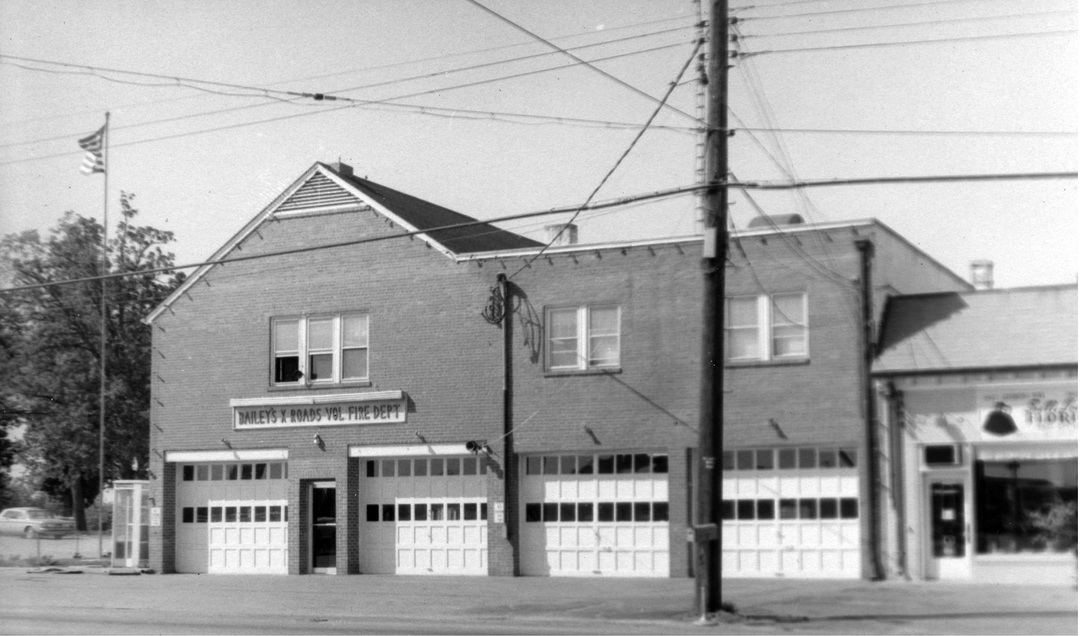
    <summary type="html"><![CDATA[<p><strong><em>Because the Bailey's Crossroads school building was so small, students used the neighboring firehouse meeting hall as their student lounge from 1959 to 1964. They also enjoyed patronizing neighborhood businesses. Campus life at Bailey's centered around these locations.</em></strong></p><img src="https://pastandpresent.curatescape6.reclaim.hosting/files/fullsize/ffeeda3b70558ea508b42ff334d73814.jpg" alt="The Bailey&#039;s Crossroads Volunteer Fire Department Station" /><br/><p>Since George Mason College had no dorms, students spent their free time between morning and afternoon classes on or near campus. The combination of a small school building and constant togetherness fostered strong bonds between students and faculty, creating a casual learning environment with great camaraderie. Oral history interviews with former students Richard Sparks, Ann Walker Sparks, James Heath, Nancy Buddeke Heath, Helen Momsen, and Douglas Nelms describe the closeness and the spirit of fun that characterized student life at Bailey's. Additionally, Sparks and Nelms pursued photography as a hobby and captured students' experiences at George Mason College in Bailey’s Crossroads in the 1960s. </p><p>The neighboring Bailey’s Crossroads Volunteer Fire Department graciously offered to let the students use their second-floor meeting hall as a student lounge. It became a significant part of student life at Bailey’s Crossroads. They spent time between classes and ate their lunches there. Momsen and Nelms remembered students playing card games, including Bridge, Hearts, and Spades in the student lounge. Fire sirens occasionally disrupted the students’ leisure time since the fire station was in active use. </p><p>The student lounge featured soda and candy vending machines, which the student body owned and moved from the schoolhouse to the fire hall. The fire department hosted bingo games in their meeting hall on the weekends. Heath recalled refilling the soda machines because they were empty by the middle of each bingo game. As a result, the student body had a steady supply of money for the treasury. They eventually sold the vending machines to the fire department.</p><p>When not in the student lounge, students spent time in the small campus library, played sports on the lawn and patronized nearby businesses. Nelms enjoyed Gifford’s Ice Cream and ate lunch from Steak ‘N a Sack, a restaurant owned and operated by a Palestinian immigrant family. Sparks bought lunch from the nearby Krispy Kreme because it was inexpensive, and he did not have to cross the highway. Walker Sparks ate lunch from Hot Shoppes, just across the highway, and Burger Chef, a McDonald’s competitor. They also enjoyed movies at the Flying Saucer Drive Inn on Leesburg Pike. Sparks highlighted some of these places a map he created in the early 2000s.</p><p>The student government met in the fire department hall, where they held debates and elections. In the spring of 1963, Momsen, then a first-year student, ran for student body president as the first female candidate, losing by fewer than ten votes. As a consolation prize, an administrator handed Momsen a stack of mimeographed pages. These were copies of the then-current student "newspaper", <em>Perspective</em>. She was offered the job of editor of the student newspaper. Momsen used her connections to establish a high-quality newspaper for George Mason College, which she named <em>The Gunston Ledger</em>. <em>The Gunston Ledger</em> became the chronicle of student life and created a legacy of Mason student media that continues today.</p><p>Although the students knew that the Bailey’s Crossroads campus was temporary, they were fond of their school. Nelms gleefully recalled students playing pranks on each other and their professors. Sparks admitted that when he first arrived, he did not take his studies seriously and frequently skipped classes. However, despite students’ laid-back attitudes toward learning, they admired and respected the faculty. For example, Sparks and Heath recognized the positive impact that Dr. Fanny-Fern Davis had on their academic and career development. Buddeke Heath concurred that the teaching was “first-class.” Although Walker Sparks and Sparks continued their education at other prestigious schools, they felt most attached to Mason.</p><p>The students’ pride in the Bailey’s Crossroads campus is evident in their determination to establish a campus culture and lasting traditions and their bittersweet feelings toward moving to the Fairfax campus. An excerpt from Kathy Howell’s “Winding up the Semester that Was” column in <em>The Gunston Ledger</em>, Volume 1, Number 4.5, details students’ affinity for their campus and its culture.</p><p><em><strong><a href="https://pastandpresent.curatescape6.reclaim.hosting/items/show/2">For more (including 10 images) view the original article</a></strong></em></p>]]></summary>
    <published>2022-10-06T16:06:07+00:00</published>
    <updated>2026-04-17T19:45:23+00:00</updated>
    <link rel="alternate" type="text/html" href="https://pastandpresent.curatescape6.reclaim.hosting/items/show/2"/>
    <id>https://pastandpresent.curatescape6.reclaim.hosting/items/show/2</id>
    <author>
      <name>George Mason University Past and Present Team</name>
    </author>
  </entry>
</feed>